Ujjain eats like the rest of Malwa: generously, with a sweet tooth, and with a strong vegetarian tradition shaped by its temples. You will not find a single "must-visit" restaurant here — and we deliberately do not name vendors, because quality changes and recommendations go stale. What you will find is a set of dishes worth seeking out, and some practical advice for eating well around a pilgrimage.
Breakfast: poha and jalebi
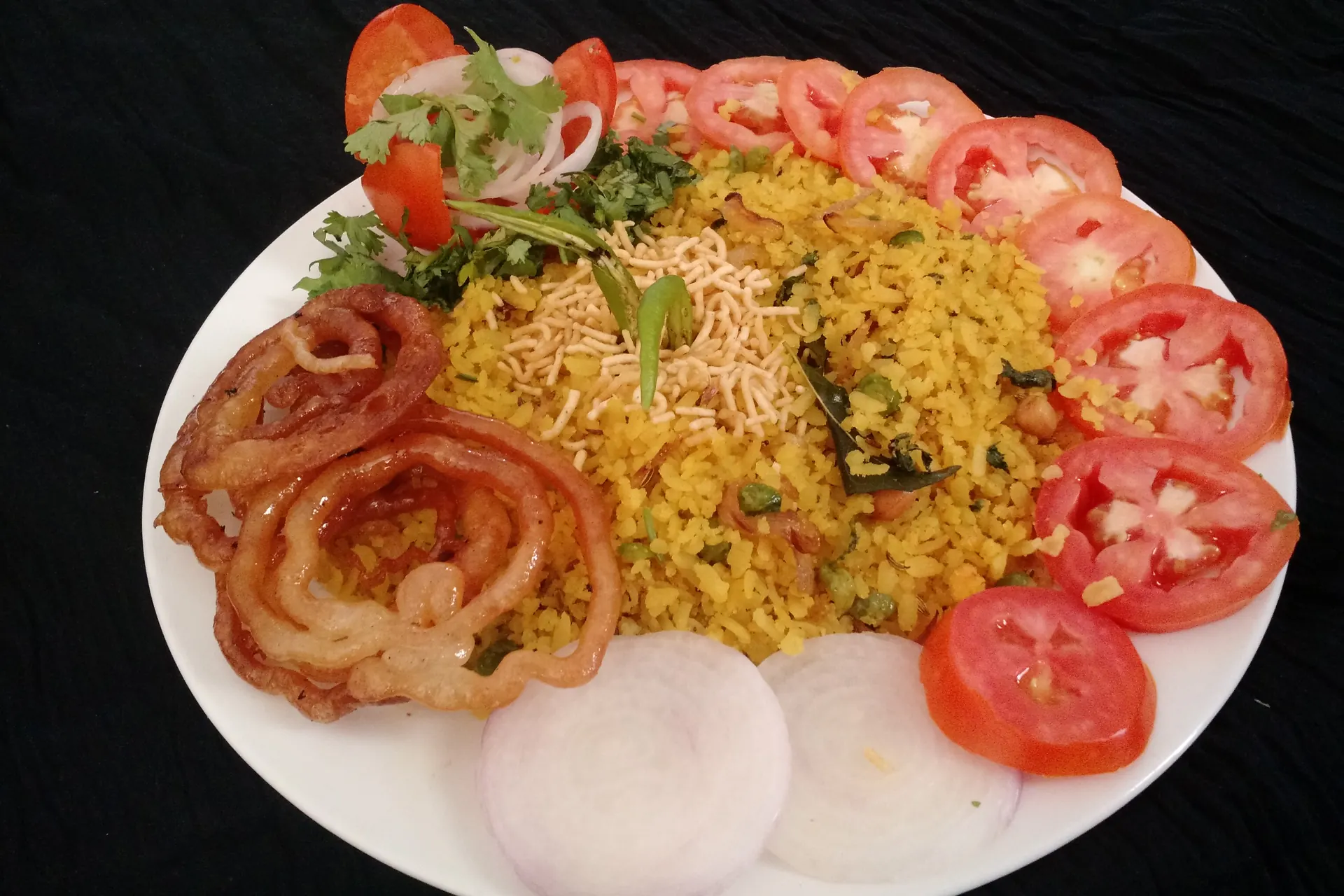
The classic Malwa breakfast is poha — flattened rice tempered with mustard seeds, curry leaves and turmeric, steamed and topped with sev, onion, coriander and a squeeze of lime — eaten with hot, crisp jalebi. Some stalls add a sprinkle of jeeravan, a local spice mix. It is light enough to eat before a long darshan queue, and you will find it served early across the city.
The signature meal: dal-bafla
Dal-bafla is Malwa's answer to Rajasthan's dal-baati. Wheat dough balls are first boiled, then baked or roasted until crisp outside, broken open and soaked in ghee, and eaten with dal, chutney and often ladoo. It is filling — best as a leisurely lunch followed by rest, not before a temple visit.
Snacks and street food
- Bhutte ka kees: grated corn cooked with milk, ghee and spices until creamy, finished with coriander and lime. Especially good in the monsoon when fresh corn is in season.
- Kachori and samosa: fried snacks served with chutneys, popular through the day.
- Sabudana khichdi: sago pearls cooked with peanuts, potato and green chilli — a staple on fasting days, so you will find it more widely during Shravan and Navratri.
- Garadu: fried yam cubes with chaat masala and lime, a winter speciality across Malwa.
Sweets
- Malpua: sweet pancakes fried in ghee and soaked in syrup, often served during festivals.
- Jalebi and imarti: spirals of fried batter in syrup, best eaten hot.
- Rabri and milk sweets: thickened milk desserts and pedas are widely sold near the temples and make good prasad to take home.
- Shrikhand: strained, sweetened yoghurt flavoured with cardamom or saffron.
Eating near the temples
The district lists sev, poha, kachori, jalebi, gulab jamun, dal-bafla and aalu bada among Ujjain's popular foods.
The area around the main temples is overwhelmingly vegetarian, and many eateries serve satvik food without onion or garlic, especially during festivals. Thalis — dal, sabzi, roti, rice, kadhi and a sweet — are the easiest way to eat a balanced meal between darshans.
The temple committee runs a free Annakshetra (food service), in operation since 2 August 2004, and two guest houses for devotees at a nominal fee.
Practical tips
- Eat light before darshan. Queues can be long; poha or fruit is better than a heavy meal.
- Prefer freshly cooked, hot food and busy stalls with high turnover.
- Carry water and drink sealed bottled water if you have a sensitive stomach.
- Ask about spice levels if you are travelling with children or elderly relatives.
- Fasting days: on Mondays in Shravan and during Navratri, many devotees fast; vrat-friendly food is easy to find at those times.
Food and culture
Food in Ujjain is tied to its festival calendar — sweets for Maha Shivaratri, fasting dishes in Shravan, fairs on the ghats during Kartik. For the wider story of the city's festivals, crafts and traditions, read Ujjain's culture and food.
Fit a food stop into your plans with the one-day or three-day itinerary. If you are staying in Indore first, the city's food culture is a highlight — see places near Ujjain.