Ujjain is a city you can visit in any month — Mahakal never closes, and the Shipra aarti is held every evening. But the experience changes enormously with the season and the festival calendar. A quiet weekday darshan in January and a Shravan Monday when Mahakal's palanquin moves through packed streets are two completely different trips. This guide helps you choose deliberately.
Ujjain's seasons at a glance
The cooler winter months are generally the most comfortable time to visit; summers are hot and the monsoon brings heavy rain. Check IMD forecasts before travelling.
| Season | What it is like | Good for |
|---|---|---|
| Winter | Cool mornings, pleasant days | Long temple days, walking the old city, first-time visitors, elderly travellers |
| Summer | Hot afternoons | Early-morning and evening darshan; plan indoor rest in the middle of the day |
| Monsoon | Heavy rain, green surroundings, a fuller Shipra | Shravan festivities, Mandu and Omkareshwar side trips |
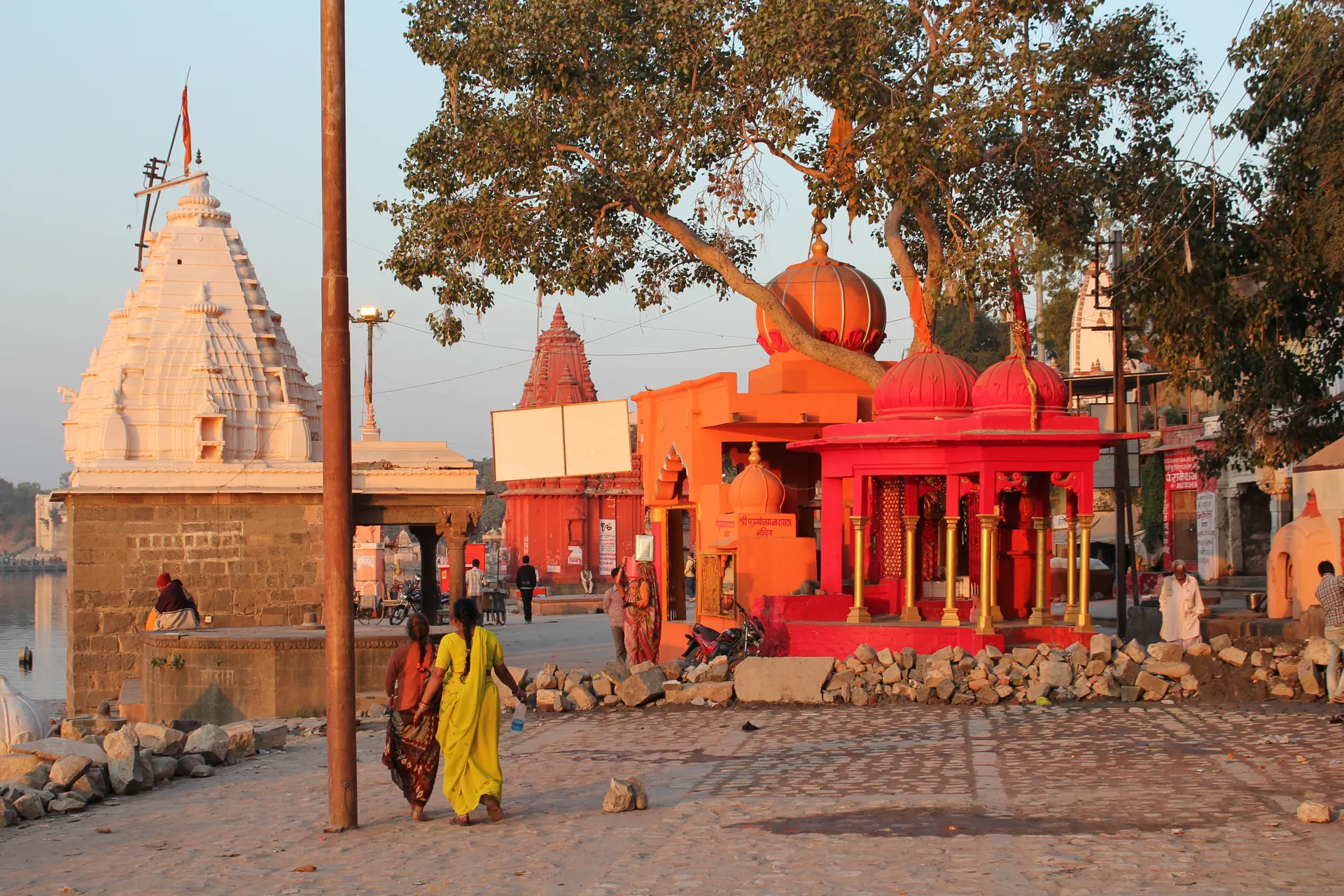
Whatever the season, the first hours after the temples open are the most comfortable time to queue, and the hour around sunset is the best time to be at Ram Ghat.
The festival calendar
Hindu festivals follow the lunar calendar, so their Gregorian dates move each year. Use the months below as a guide and confirm exact dates before booking.
Shravan and the Mahakal Sawari
In the months of Shravan and Bhadrapada, Mahakal's procession (Sawari) passes through the city every Monday from the start of Shravan. The last ride is the royal (Shahi) Sawari.
The Sawari is the most atmospheric sight in Ujjain: bands, devotees, decorated streets and the deity carried out to meet the city. It is also the most crowded time of year, with temple routes and gates changed by the administration. Come for the Sawari if that is what you want to see; avoid Shravan if you want an unhurried darshan.
Nag Panchami
The Nagchandreshwar temple on the topmost level of the Mahakaleshwar temple opens to the public only once a year, on Nag Panchami. Nag Panchami falls on the fifth day of the bright fortnight of Shravan. It is the only day of the year the Nagchandreshwar temple on the top level of Mahakaleshwar opens for darshan. Expect exceptional crowds across the city on this day.
Maha Shivaratri
Maha Shivaratri falls in the Hindu month of Phalguna. It caps the temple's nine-day Shiv Navratri (Phalgun Krishna Panchami to Trayodashi), with worship through the day and a night Mahapuja. After the Sehra Darshan comes the traditional afternoon Bhasma Aarti, held only once a year. The weather at this time of year is usually still comfortable, which makes it a popular choice — book stays early.
Other Sawaris through the year
Mahakal's procession passes through Ujjain on Mondays of Shravan up to the Bhadrapada Amavasya (the last Sawari drawing the largest crowds), again from Kartika to Margashirsha, and on Vijayadashami.
On Vaikunth Chaturdashi, Mahakal's midnight procession visits Gopal Mandir for the Harihar Milan, the ritual meeting of Shiva and Vishnu.
Kartik Mela and Kalidas Samaroh
A fair is traditionally held on the Shipra in the Hindu month of Kartik; check the district administration for current dates. The ghats come alive with fairs and evening lamps, and the weather is turning pleasant.
The Kalidas Samaroh has been held every year at Ujjain since 1958; the state government set up the Kalidasa Akademi to organise it. It is a good reason to visit if you are drawn to the city's literary rather than purely religious heritage.
Panchkroshi Yatra
The Panchkroshi Yatra, a pilgrimage circuit around Ujjain, takes place every year (listed by the district for May) and draws thousands of devotees. Expect busy roads around the city's edges while it is under way.
Navratri at Harsiddhi and Gadkalika
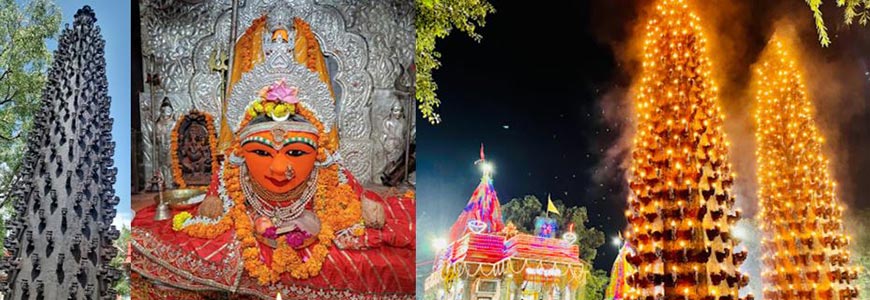
The lamp pillars at Harsiddhi present a striking sight during Navratri, and both Navratris draw large gatherings at Gadkalika. Both Harsiddhi Mata and Gadkalika are decorated and their evening rituals draw large crowds.
Simhastha 2028
Ujjain's Kumbh, the Simhastha, returns in 2028. Simhastha 2028 runs from 27 March to 27 May 2028 in Ujjain, with the three Shahi (Amrit) Snan on 9 April, 23 April and 8 May 2028.
During Simhastha the city is transformed: akharas camp along the river, bathing ghats operate under controlled entry, and traffic and parking are managed by the district administration. It is a once-in-twelve-years experience, but not the time for a quiet first visit. See our Simhastha 2028 guide for the latest official information.
Which days of the week are busiest?
- Mondays are Shiva's day and are busier at Mahakaleshwar throughout the year.
- Tuesdays draw devotees to Mangalnath for Mangal rituals.
- Wednesdays are traditionally special at Chintaman Ganesh.
- Weekends and public holidays bring day-trippers from Indore and nearby towns.
So when should you go?
- For a calm, first-time visit: a weekday in the cooler months, outside festival dates.
- For atmosphere: a Shravan Monday for the Sawari, or Maha Shivaratri — and accept the crowds.
- For elderly travellers: the cooler months, on weekdays, with a quick-darshan pass if available. See the senior citizen travel guide.
- For Bhasma Aarti: any season, but book well ahead; demand peaks in Shravan and on festivals. See the Mahakal darshan guide.
Next, read how to reach Ujjain, choose an itinerary — one day, two days or three days — and explore Ujjain's culture and festivals.
FAQ
Frequently asked questions
Which month is best for visiting Ujjain?
For comfortable weather, the cooler winter months are generally the most pleasant; check IMD forecasts before you travel. For atmosphere, the Shravan Mondays of the Mahakal Sawari are the most spectacular, but also the most crowded.
When is Mahakal least crowded?
Ordinary weekdays outside Shravan, festivals and long weekends are usually calmer, especially early in the morning soon after the temple opens.
Should I visit during Simhastha 2028?
Only if you want to experience the Kumbh itself. Expect very large crowds, traffic controls and accommodation booked far in advance. Check the official calendar before you plan.