
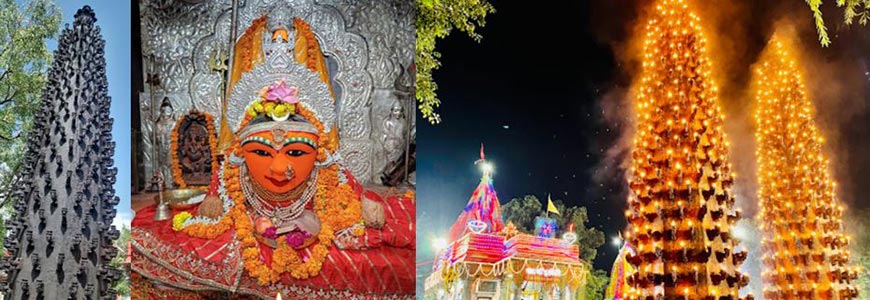
Historical Significance of Harsiddhi Temple
Harsiddhi Temple in Ujjain is an ancient shrine dedicated to Goddess Harsiddhi, a manifestation of Shakti. The temple is believed to date back to around the 11th century and is associated with the Solanki period.
According to local legends, King Bhimdev built the temple under divine guidance from the goddess. Located on elevated ground, the temple offers a serene atmosphere ideal for meditation and devotion.
Architectural Beauty
The temple displays traditional Indian architecture with detailed carvings, ornate pillars and sculptural depictions from Hindu mythology. The idol of the goddess symbolizes both strength and compassion.
Its structure blends Solanki and Chalukya architectural styles, reflecting the artistic heritage of ancient India.
Religious and Spiritual Importance
Devotees worship Goddess Harsiddhi for protection, prosperity and removal of obstacles. The temple becomes especially vibrant during Navratri and other festivals when special rituals are performed.
Many visitors experience peace and spiritual rejuvenation while praying in the tranquil temple surroundings.
Cultural Significance
The temple hosts cultural programs, music performances and traditional events throughout the year, preserving regional heritage and traditions.
It also forms an important part of the Ujjain pilgrimage circuit attracting pilgrims and tourists alike.
A Must-Visit Pilgrimage Destination
Whether seeking blessings, exploring history or enjoying architecture, Harsiddhi Temple offers a memorable spiritual experience for every visitor.
Conclusion
Harsiddhi Temple stands as a timeless symbol of devotion and cultural heritage in Ujjain, continuing to inspire generations with faith and spirituality.