
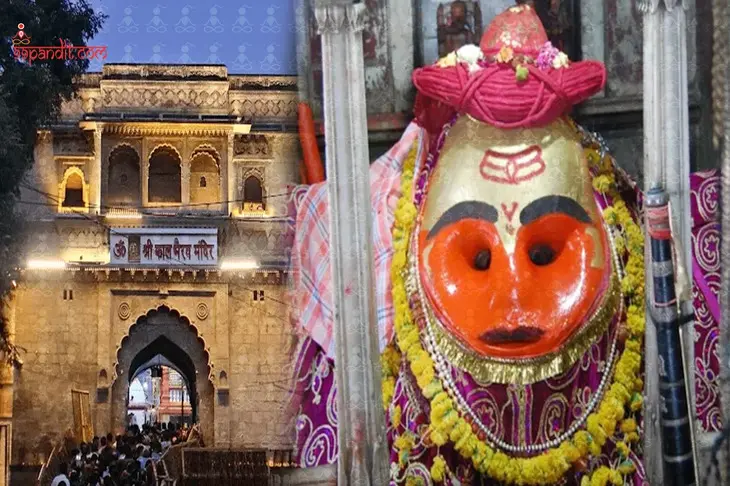
Historical Significance of Kaal Bhairav Temple
Kaal Bhairav is considered the fiercest form of Lord Shiva, representing destruction of evil and restoration of cosmic balance. According to Hindu mythology, Lord Shiva created Kaal Bhairav to punish Brahma and protect the universe.
The temple in Ujjain is believed to be over a thousand years old and dates back to the Parmar dynasty. Over time it has been renovated while preserving its spiritual importance.
Architectural Significance
The temple features traditional Indian stone architecture combining Nagara and Dravidian styles. The sanctum houses the idol of Kaal Bhairav depicted with a garland of skulls, trident and drum symbolizing both wrath and compassion.
Devotees worship the deity seeking courage, protection and removal of negative influences.
Religious and Spiritual Importance
Kaal Bhairav is known as the guardian of time. Devotees pray for strength, protection and freedom from fear.
A unique ritual here is the offering of liquor to the deity, symbolizing the breaking of worldly attachments and purification of the mind.
Many travelers seek blessings before journeys believing the deity ensures safe travel and success in major life decisions.
Festivals and Celebrations
Kaal Bhairav Jayanti in Kartik month attracts thousands of devotees. Special prayers and decorations fill the temple with spiritual energy.
Monthly Kaal Bhairav Ashtami is also celebrated with rituals and devotional singing.
Cultural Importance
The temple hosts devotional music and cultural gatherings and forms part of the larger Ujjain pilgrimage circuit including Mahakaleshwar Temple and other sacred sites.
Why Visit Kaal Bhairav Temple
Pilgrims visit seeking protection, courage and spiritual awakening. The temple’s powerful atmosphere and historic importance make it an essential stop in the Ujjain pilgrimage journey.
Conclusion
Kaal Bhairav Temple remains a symbol of divine protection and faith in Ujjain, inspiring devotees for centuries and guiding them through strength and devotion.