Ujjain has been a sacred city for well over two thousand years, and it shows: temples to Shiva, the Devi, Ganesha, Krishna and the planets are scattered through the old city and along the Shipra. The list below covers the temples most visitors want to see, grouped by area so you can plan a sensible route, with links to a full visitor guide for each.
The old city cluster
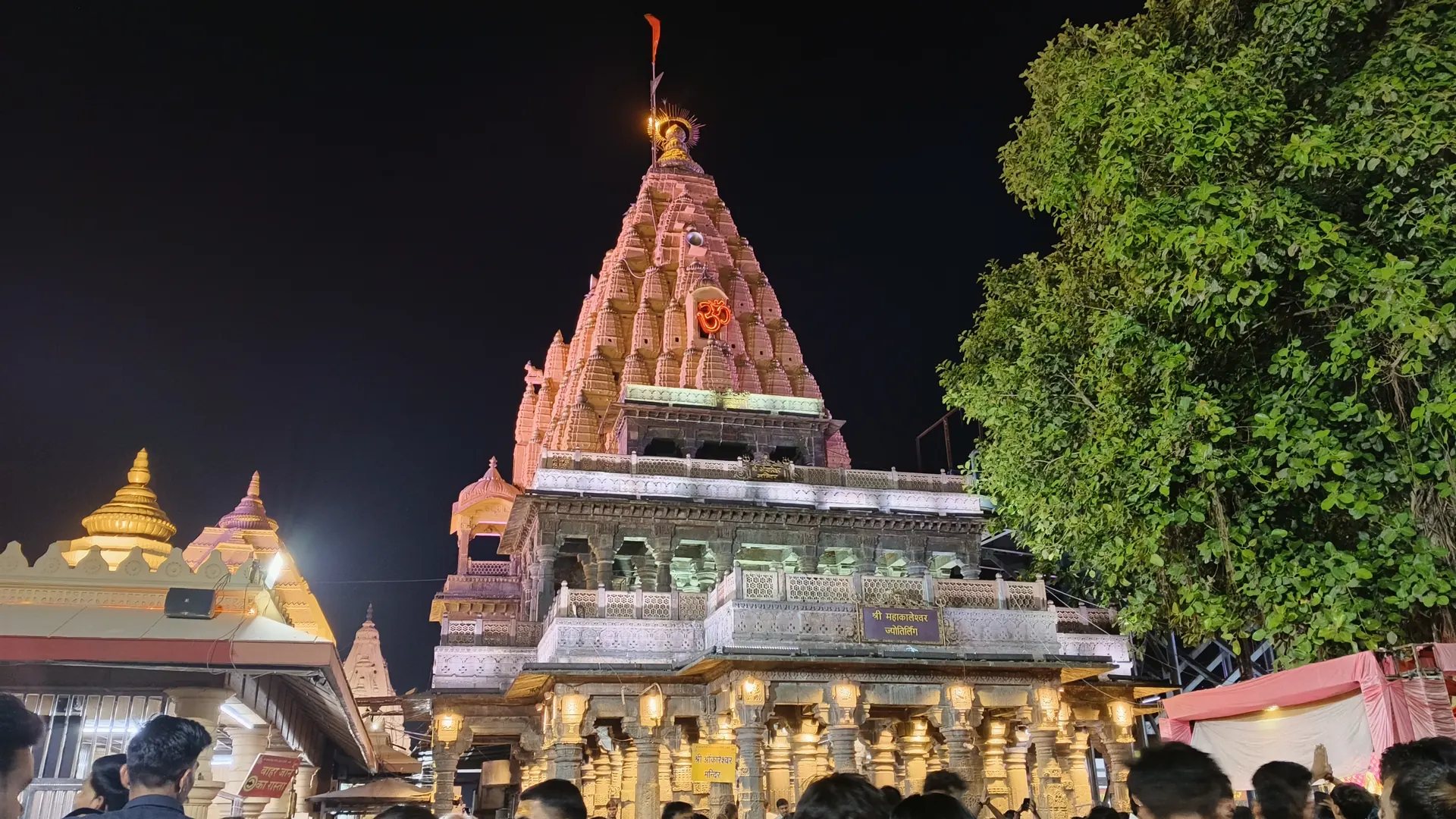
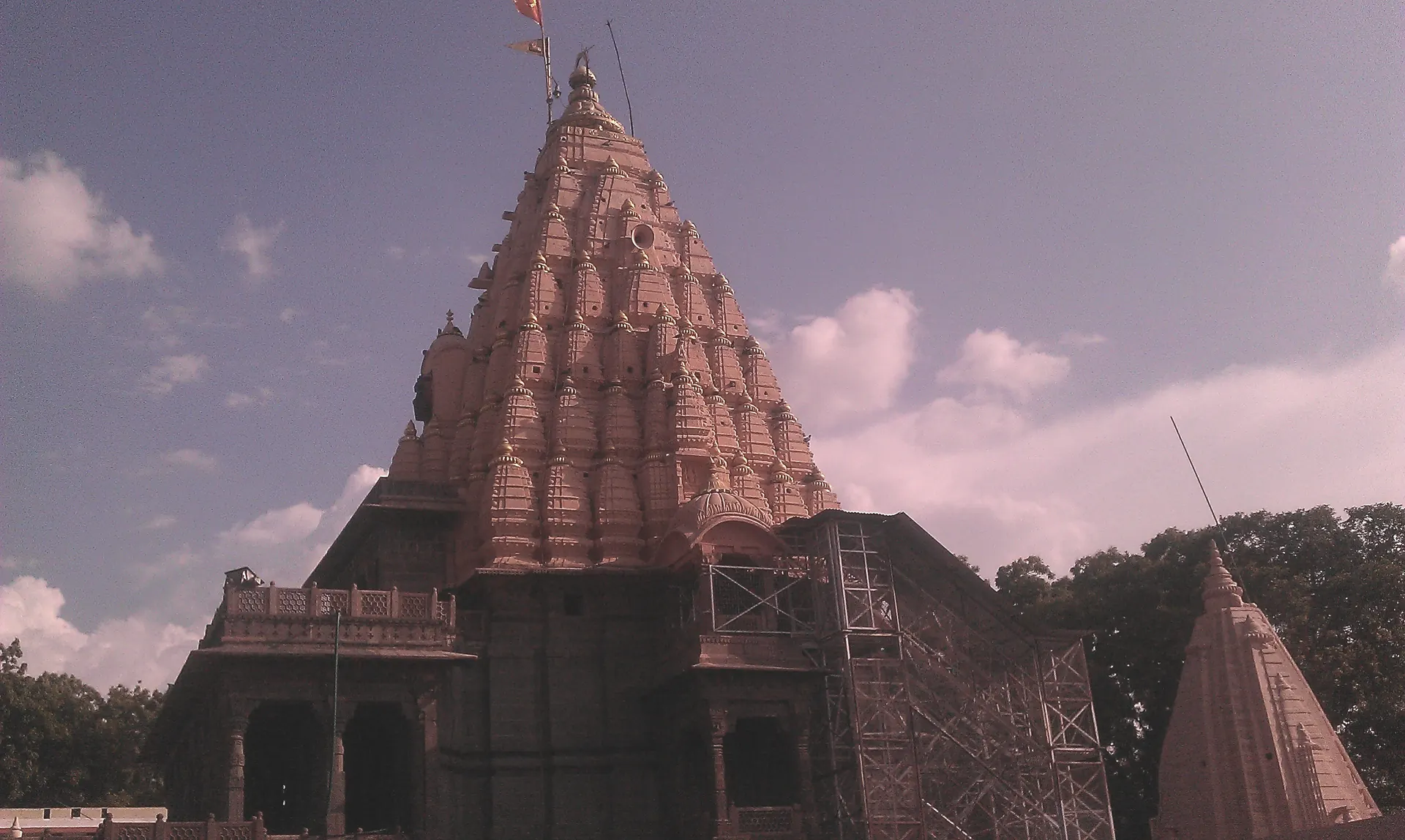
Shri Mahakaleshwar Jyotirlinga
The presiding deity of Ujjain and one of the twelve Jyotirlingas. The Mahakaleshwar lingam faces south (Dakshinamurti), a feature held to be unique among the twelve Jyotirlingas. It is the home of the Bhasma Aarti. Visitor guide · Darshan guide
Mahakal Lok
The corridor around the temple, with sculpture and murals from Shiva's stories. Mahakal Mahalok is based on the Shiva Purana. It has 76 sculptures depicting Shiva's mythology, a mural wall with 52 paintings, and a corridor lined with 108 pillars. Visitor guide
Harsiddhi Mata Temple
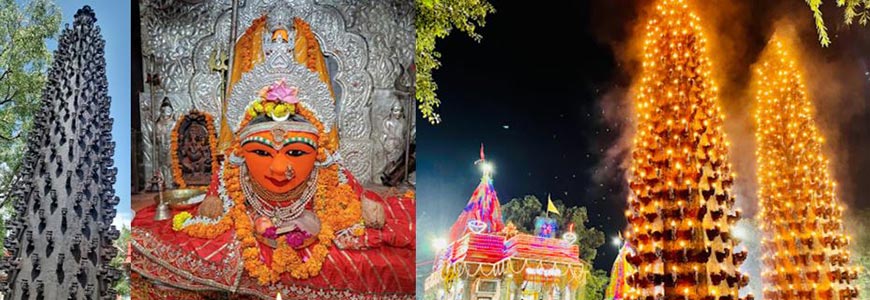
Harsiddhi is revered as a Shakti Peeth: by the Shiva Purana, Sati's elbow fell here. The temple was rebuilt in the Maratha period, and its two lamp pillars, typical of Maratha art, are lit during Navratri. Visitor guide
Bade Ganeshji Ka Mandir
A large, much-loved Ganesha idol close to the Mahakaleshwar complex, easily included on the same walk.
Ram Ghat
The principal ghat on the Shipra and the place for the evening aarti. Ram Ghat guide
The market
Gopal Mandir
Gopal Mandir was built in the 19th century by Bayajibai Shinde, queen of Maharaja Daulat Rao Shinde (Scindia). Visitor guide
North of the old city and across the river
Gadkalika Temple
Gadkalika is one of Ujjain's ancient temples; the poet Kalidasa is said to have worshipped this image of Goddess Kali. The district counts Gadkalika and Harsiddhi as Ujjain's two Shakti Peeths, and both Navratris draw large gatherings. Visitor guide
Bhartrihari Caves
By tradition, the poet-king Bhartrihari meditated here after renouncing his throne; the caves lie near the Gadkalika temple on the Shipra. Visitor guide
Kal Bhairav Temple
Kal Bhairav, the chief of the eight Bhairavas, is believed to have been built by King Bhadresen on the banks of the Shipra and is mentioned in the Avanti Khanda of the Skanda Purana. Liquor is still offered to the deity as part of the ritual. Visitor guide
Siddhavat
Siddhavat is a sacred banyan on the Shipra where rituals for ancestors are performed; tradition compares it to the Akshayavat of Prayagraj. Visitor guide
Mangalnath and Sandipani
Mangalnath Temple
According to the Matsya Purana, Mangalnath is the birthplace of Mars (Mangal). The temple overlooks the Shipra, Shiva is the deity worshipped here, and special worship is held every Tuesday. Visitor guide
Sandipani Ashram
Tradition holds that Krishna and Sudama studied at Guru Sandipani's ashram. The nearby area, Ankpat, is believed to be where Krishna washed his writing tablets, and the Gomti Kund once supplied the ashram's water. Visitor guide
Angareshwar Mahadev
A Shiva shrine of the 84 Mahadev circuit linked with Mangal (Angaraka). Read more
On the outskirts
Chintaman Ganesh Temple
The Ganesha idol is revered as swayambhu (self-manifested) and is flanked by Riddhi and Siddhi; the temple lies across the Shipra from the old city, on the Fatehabad side. Visitor guide
Other sacred and historic sites
- Navagraha Mandir, Triveni: a temple to the nine planets on the Shipra, south of the old city — a natural pairing with a Navgrah Shanti pooja.
- Chaubis Khamba: an old gateway with twenty-four pillars, a remnant of the walled city near the Mahakaleshwar area.
- Vedh Shala (Jantar Mantar): The observatory was built by Maharaja Sawai Jai Singh of Jaipur while he was Governor of Malwa under Emperor Muhammad Shah. It was later renovated by Maharaja Madhav Rao Scindia and has been in use since. Year of construction: 1719, according to the Ujjain district administration (other sources give 1725).
- Kaliyadeh Palace: a historic palace on an island in the Shipra, a quieter stop away from the temple crowds.
- ISKCON Ujjain: a modern Krishna temple, spacious and calm — useful for families.
Planning your temple visits
- Follow the clusters: old city on foot, then by vehicle to the north and across the river, then Mangalnath–Sandipani, with Chintaman on the way in or out.
- Go early: mornings are calmer and cooler. Mondays are busiest at Mahakal, Tuesdays at Mangalnath, Wednesdays at Chintaman.
- Dress modestly and expect to remove footwear — see the visitor guidelines.
- Use an itinerary: one day, two days or three days.
Browse all places to visit in Ujjain, read the history of Ujjain, or let us organise transport, a guide and darshan assistance with an Ujjain tour package.